
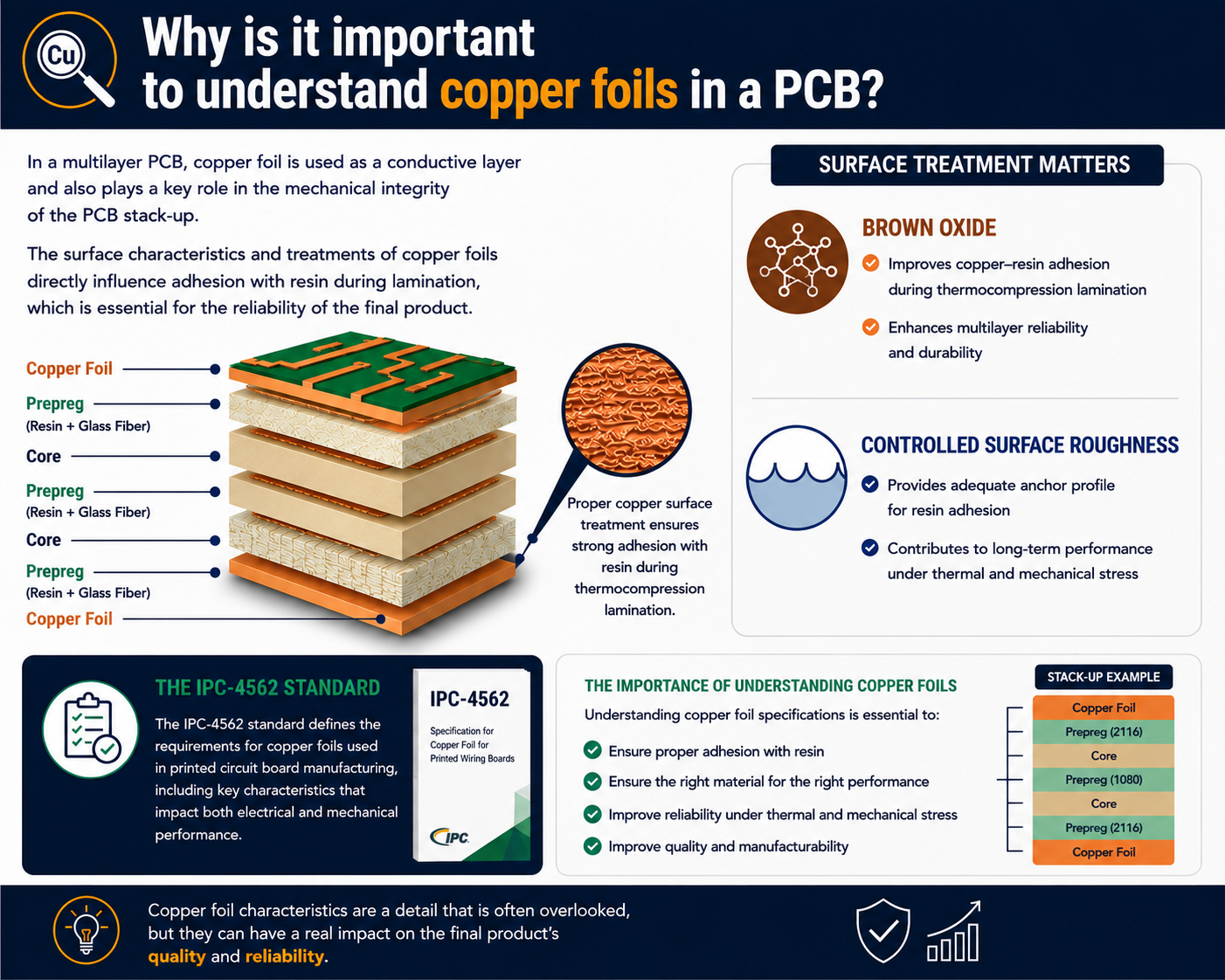
In a multilayer PCB, copper foil is not only used to conduct electrical signals and power. It also plays a key role in the mechanical integrity of the PCB stack-up.
The characteristics of the copper surface directly influence the bonding between copper and resin during the lamination process.
To improve adhesion, copper foils are commonly treated to create a specific surface morphology. Historically, brown oxide treatments have been widely used to promote strong copper-to-resin bonding during thermocompression lamination.
This interface is particularly important because it contributes to the reliability of the multilayer structure throughout thermal cycling, mechanical stress, and long-term operation.
The IPC-4562 standard defines the requirements for copper foils used in printed circuit board manufacturing and helps ensure consistent electrical and mechanical performance.
This is why understanding copper foil specifications is important when reviewing PCB materials and stack-ups. A detail that is often overlooked, but one that can have a significant impact on manufacturability, reliability, and product lifetime.
#PCB #PCBA #PCBDesign #Electronics #ElectronicsManufacturing #IPC4562 #HardwareDesign